| Property | Value | Image |
|---|---|---|
| Type | F3V Yellow-White Main Sequence Star | 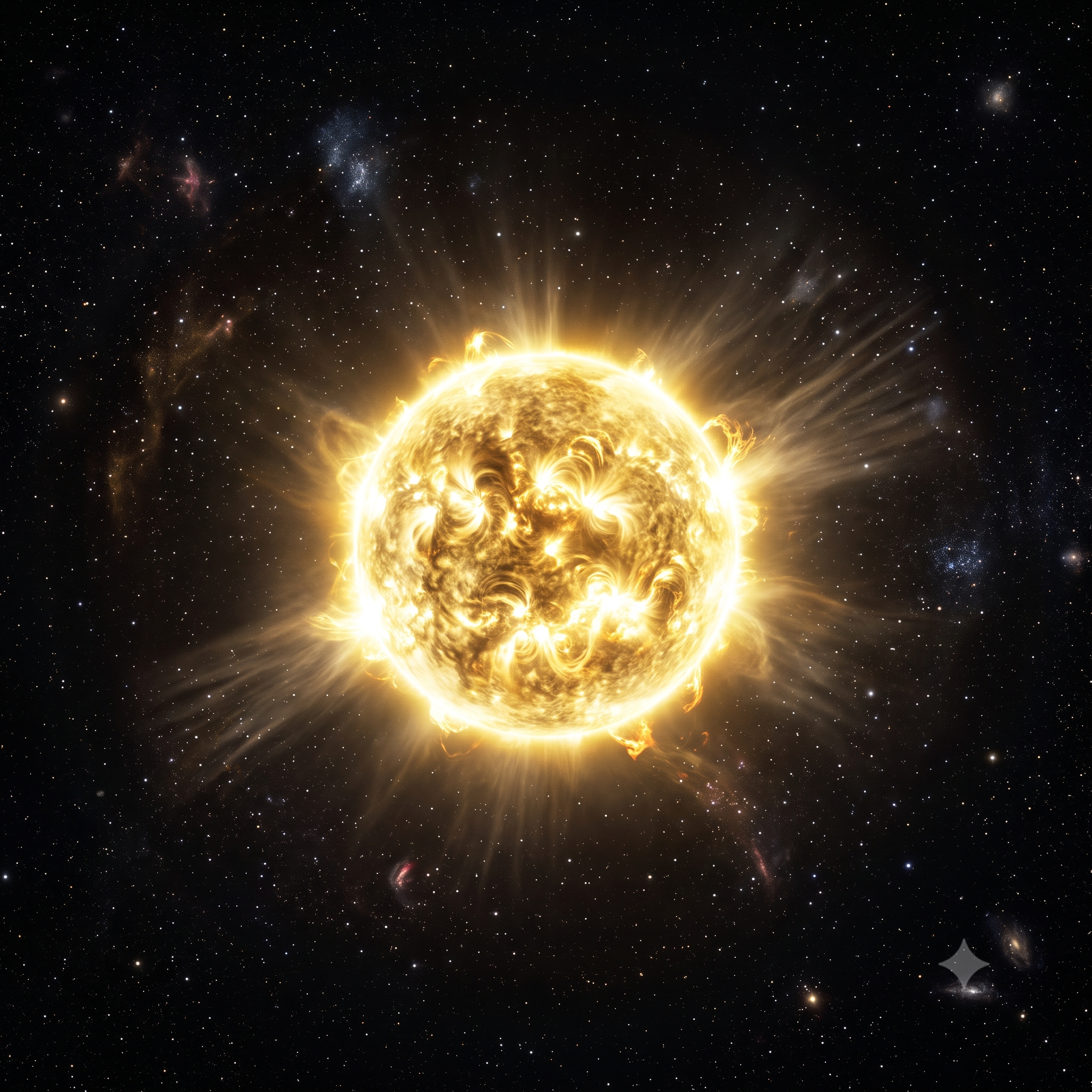 |
| Radius | 5.95 × 10⁵ km | |
| Mass | 2.27 × 1030 kg (1.1% of Sol) | |
| Temperature | 7000 K | |
| Luminosity | 6.06 × 1026 W (158.6% of Sol) | |
| Habitable Zone | Between 1.2 and 1.73 AU | |
| Location | Crimson Horizon Sector |
The star Ulrkabma is approximately 2.65 billion years old, with an expected lifespan of 2.79 billion years and possesses a main-sequence habitable zone lifespan spanning between 2 and 4 billion years, which provides sufficient time for complex biospheres to emerge, including advanced UV-shielding and biofluorescent adaptations.
This system contains 2 planets and 6 moons. There is 1 class M world in the system. The star's stellar wind creates a bubble, known as the heliosphere, which extends out to approximately 64.9479 AU. Beyond this, the star's gravitational influence extends out to a distance of 1.78 light-years, marking the ultimate edge of the system.
¶ Azulpha Stenoth
| Property | Value |
|---|---|
| Class | A |
| Distance | 9.4 × 10⁷ km (0.627 AU) |
| Period | 181 days 12 hours and 34 minutes |
| Radius | 934.91 km |
| Gravity | 0.124 g |
There are no moons orbiting this planet. This planet has a surface pressure of 587266.1 kPa or 5797.30 atmospheres and a temperature of 188.9 degrees C. It is a small, barren, and volcanic world with an atmosphere of a mix of sulfur dioxide and carbon dioxide and a composition of igneous silica and basalt.
This world has an automated ore extraction and refining facility operated by the Kael-Vhari.
¶ Halidon
| Property | Value | Image |
|---|---|---|
| Class | M | 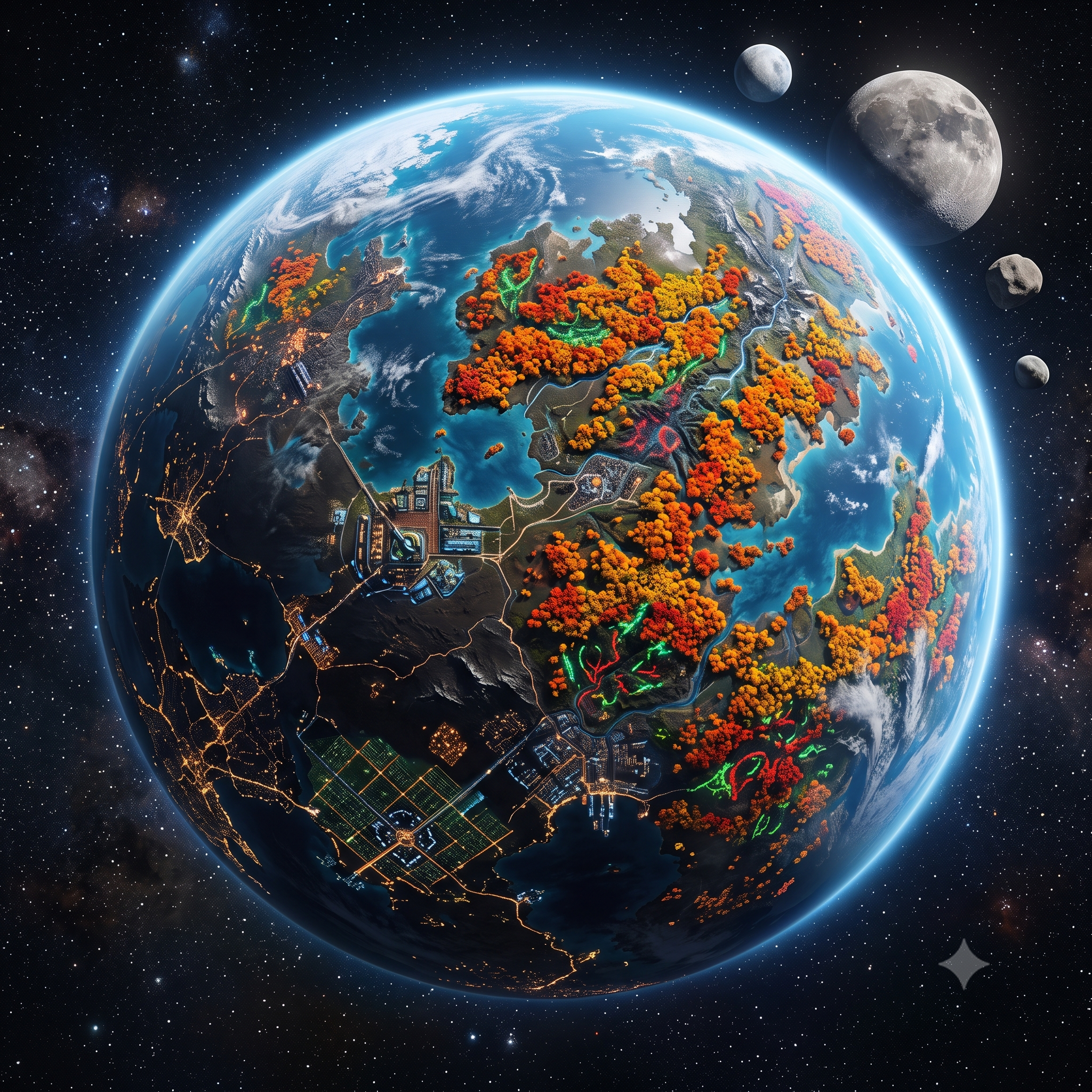 |
| Distance | 1.339 AU | |
| Period | 1 year 200 days 22 hours and 55 minutes | |
| Radius | 5,866.0 km | |
| Gravity | 1.097 g |
There are 6 moons orbiting this planet. This planet has a surface pressure of 90.5 kPa or 0.89 atmospheres and a temperature of 11.9 degrees C. It is a terrestrial earth-like world with an atmosphere of a mix of oxygen, nitrogen, and argon and a composition of silicon, iron, and magnesium. The planet's conditions are suitable for the development of life based on blue-optimized porphyrins, which is expected to evolve at a slow pace. The visible reflection spectrum of the life on this planet is characterized by red, orange, yellow, biofluorescent green, biofluorescent red. In the non-visible spectrum, it exhibits blue-shifted vegetation edge, strong uv absorption.
A speculative evolutionary timeline for a planet orbiting this star indicates an evolutionary pace described as hyper-accelerated. The current estimated age of the system is 2.46 Billion Years. The most recent significant evolutionary milestone prior to this age would have been Technological Civilization at 80.00 Million Years. The planet boasts a fully mature, highly complex biosphere featuring diverse ecosystems, topped by at least one sapient, tool-using species. Complex flora forms sprawling forests and varied biomes, while highly evolved fauna occupy vast ecological niches. The sapient population actively reshapes the world through agriculture, architecture, and industry.
¶ The Kael-Vhari
| Attribute | Specification | Image |
|---|---|---|
| Taxonomic Classification | Sapiens halidona |  |
| Body Archetype | Humanoid | |
| Average Height | 1.58 m to 1.72 m (5 ft 2 in to 5 ft 8 in) |
|
| Average Weight | 68 kg to 85 kg (150 lbs to 187 lbs) |
|
| Lifespan | ~110–130 Halidon Years (approx. 145–170 Earth years) |
|
| Biochemical Basis | Carbon-water; Blue-optimized porphyrin circulatory system |
Evolution on Halidon under the intense ultraviolet radiation of Ulrkabma (an F3V star emitting 158.6% of Sol’s luminosity) and a slightly heavier gravity (1.097 g) has forged the Kael-Vhari into a dense, physically resilient humanoid species.
- UV-Shielding & Biofluorescence: To survive Ulrkabma’s UV output beneath a thin atmosphere (0.89 atm), Kael-Vhari skin contains heavy, micro-crystalline pigment compounds ranging from ochre to deep crimson. Rather than passively absorbing UV radiation, specialized dermal structures metabolize the rays and re-emit the excess energy as visible light. Under direct sunlight, geometric pathways along their cheekbones, shoulders, and spines display a biofluorescent emerald green or amber-red glow.
- Gravity & Respiratory Mechanics: Compensating for Halidon's heavier gravitational pull, their skeletons utilize a reinforced calcium-phosphorus matrix enriched with dietary magnesium, resulting in a stocky build with pronounced lower-body musculature. To operate in the lower atmospheric pressure (90.5 kPa), they possess broad chest cavities and deep-lobed lungs. Their circulatory system relies on blue-optimized porphyrin complexes, giving their arterial blood a distinct purple-blue hue that turns dark slate when deoxygenated.
- Optics: Their dual-layer irises (typically copper, gold, or violet) are adapted to the bright spectrum of an F-class star. A semi-transparent nictitating membrane deploys automatically during high-glare conditions, and their visual spectrum extends into the near-UV, allowing them to track the blue-shifted edges of native vegetation.
¶ Psychology
Despite an evolutionary timeline where technological civilization appeared roughly 80 million years ago, Kael-Vhari psychology is distinctly individualistic and competitive. They are forward-thinking, but their planning is driven by personal ambition, estate preservation, and individual legacy rather than collective altruism.
With lifespans reaching 170 Earth years, a Kael-Vhari operates on a pragmatic, long-range timeline: they invest in infrastructure, land development, and resource monopolies designed to secure their own independence and outlast their rivals. They view short-term, rushed decision-making as a sign of intellectual weakness. While they rarely exhaust local resources, this is not out of planetary stewardship, but because destroying one's own economic assets is bad business. Status is measured by the longevity and self-sufficiency of an individual's personal holdings.
¶ Culture & Agrarian Economy
- Agrarian Society & Genetic Manipulation: The Kael-Vhari remain heavily agrarian, tied directly to land ownership and the soil of Halidon. Rather than crowding into industrial megacities, the planet is divided into massive, privately held agricultural provinces, botanical estates, and competitive farming syndicates. To the Kael-Vhari, biochemistry and genetic curation are highly profitable sciences used to engineer proprietary strains of Halidon's native red, orange, and yellow flora. Landholders design distinct landscapes that serve dual purposes: maximizing crop yields and aggressively signaling wealth and status to neighboring estates.
- Night-Cycle Operations: As Halidon rotates away from Ulrkabma and its six icy moons rise, settlements illuminate primarily through biofluorescence. Engineered crops, orchards, and perimeter hedges glow in radiant greens and reds, allowing estate operations and harvesting to continue uninterrupted through the night cycle.
- Celestial Navigation & Timekeeping: With six fast-moving moons orbiting millions of kilometers away, the night sky is a complex orbital clockwork. Historically, Kael-Vhari territorial contracts, agricultural cycles, and interest rates were calculated using orbital mechanics. Modern contracts and legal agreements are still strictly bound to the predictable alignments of these six moons.
¶ Technological & Industrial Status
- Orbital Infrastructure: To protect agricultural yields and estate property values, heavy industry is banned from Halidon. Wealthy syndicates instead fund orbital mirror arrays and magnetic shields within Ulrkabma's 64.95 AU heliosphere to deflect stellar winds and optimize weather over their private investments.
- System Extraction: Raw extraction and refining are exiled to the volcanic inner world Azulpha Stenoth. Independent corporations operate automated platforms and outposts there to aggressively strip-mine sulfur compounds, igneous minerals, and industrial gases for the homeworld.
- Sub-Light Propulsion & Transit: Lacking FTL or warp capability, the Kael-Vhari are system-locked, turning resource acquisition into a competitive, zero-sum game. Transit relies entirely on sub-light propulsion: syndicates use electrostatic ion drives for heavy ore haulers, while executive couriers use solar sails to ride Ulrkabma’s intense stellar wind. Because orbital voyages take weeks or months, vessel engineering prioritizes fuel efficiency, self-sufficiency, and cargo profitability over speed.
¶ Moons
¶ Umbaineyx
| Property | Value |
|---|---|
| Class | D |
| Distance | 3.6764 × 10⁶ km |
| Period | 1 day 9 hours and 46 minutes |
| Radius | 239.55 km |
| Gravity | 0.032 g |
This moon has no atmosphere and a surface temperature of -18.5 degrees C. It is a small icy body with a composition of frozen hydrocarbons and ice.
¶ Sprirdrf Olnivette
| Property | Value |
|---|---|
| Class | D |
| Distance | 6.1245 × 10⁶ km |
| Period | 3 days and 37 minutes |
| Radius | 216.05 km |
| Gravity | 0.03 g |
This moon has no atmosphere and a surface temperature of -12.5 degrees C. It is a small icy body with a composition of frozen hydrocarbons and ice.
¶ Sprill Iopecas
| Property | Value |
|---|---|
| Class | D |
| Distance | 7.5536 × 10⁶ km |
| Period | 4 days 3 hours and 27 minutes |
| Radius | 209.2 km |
| Gravity | 0.03 g |
This moon has no atmosphere and a surface temperature of -14.7 degrees C. It is a small icy body with a composition of frozen hydrocarbons and ice.
¶ Mipoly Hymnia
| Property | Value |
|---|---|
| Class | D |
| Distance | 7.7678 × 10⁶ km |
| Period | 4 days 7 hours and 43 minutes |
| Radius | 271.25 km |
| Gravity | 0.032 g |
This moon has no atmosphere and a surface temperature of -20.6 degrees C. It is a small icy body with a composition of frozen hydrocarbons and ice.
¶ Shakok Ollipe
| Property | Value |
|---|---|
| Class | D |
| Distance | 7.9585 × 10⁶ km |
| Period | 4 days 11 hours and 34 minutes |
| Radius | 282.11 km |
| Gravity | 0.04 g |
This moon has no atmosphere and a surface temperature of -25.6 degrees C. It is a small icy body with a composition of frozen hydrocarbons and ice.
¶ Gleampe Llikokoe
| Property | Value |
|---|---|
| Class | D |
| Distance | 7.9761 × 10⁶ km |
| Period | 4 days 11 hours and 55 minutes |
| Radius | 92.93 km |
| Gravity | 0.011 g |
This moon has no atmosphere and a surface temperature of -26.1 degrees C. It is a small icy body with a composition of frozen hydrocarbons and ice.
¶ Asteroid Belt
An asteroid belt orbits roughly between 1.807 AU and 2.901 AU. This is a typical asteroid belt, composed of high concentrations of serpentine, moderate concentrations of coronene, small concentrations of biotite, and trace amounts of titanite.